Industrial sector project
Published on
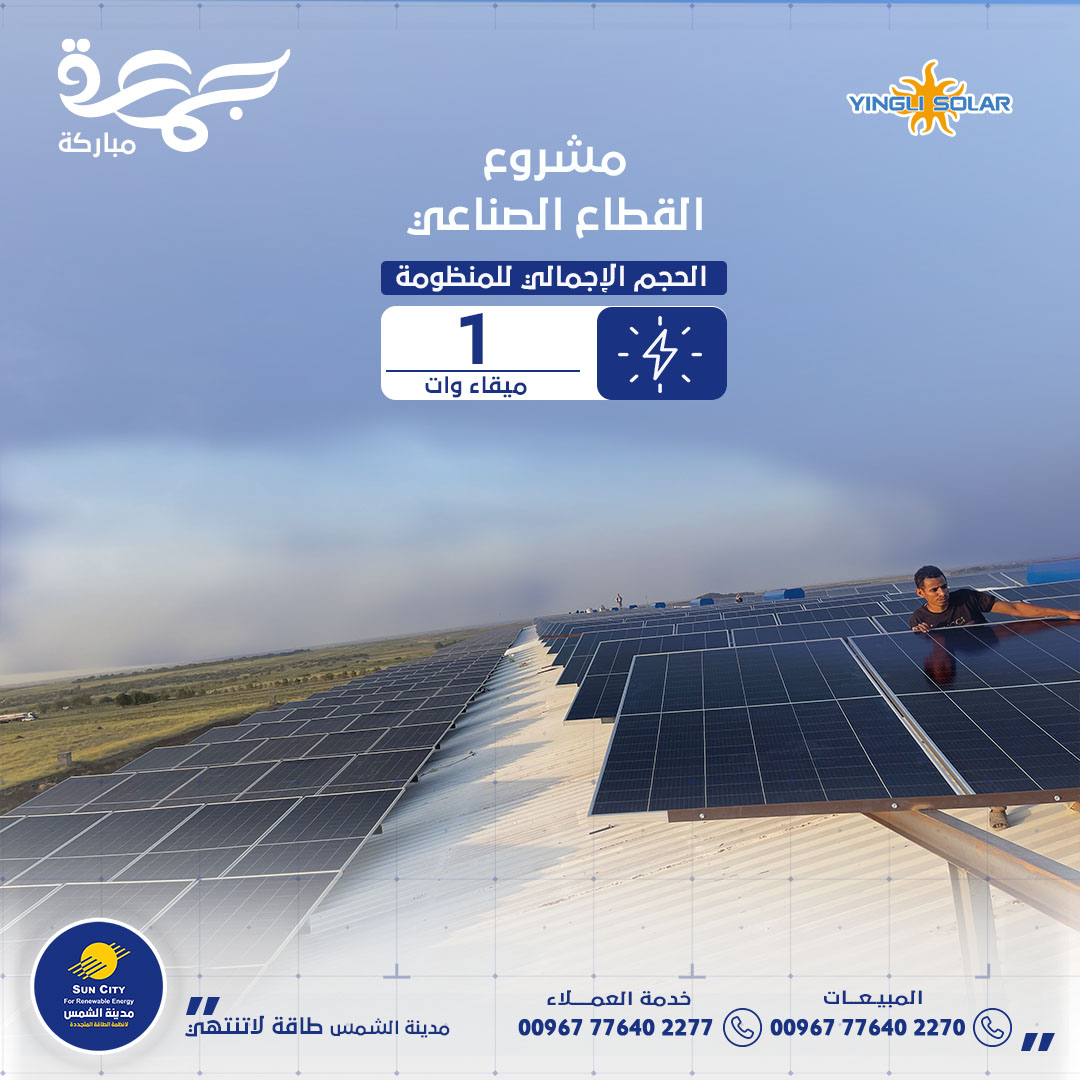
📑 Solar Power System Project for Mazaya Factory – 1 MW
1. General Objective of the Project
The project aims to equip Mazaya Factory with a 1 MW (1000 kWp) photovoltaic solar power system to cover a significant portion of the factory’s electricity needs, powering:
Production lines and industrial machinery.
Pumps and compressors required for operations.
Industrial cooling and storage rooms.
Auxiliary electrical loads within the factory.
The project will contribute to:
Reducing electricity consumption from the grid and reliance on conventional fuels.
Ensuring stable energy supply during peak hours.
Lowering carbon emissions and enhancing environmental sustainability.
Improving the factory’s operational competitiveness by reducing energy costs.
2. Technical Components of the System
A. Solar Panels (PV Modules) – Yingli Solar
Number of panels: ~1800 panels (540–560 W each).
Efficiency: ≥ 21%.
Type: Mono PERC – Half Cut.
Installation: Mounted on galvanized steel or aluminum structures, corrosion-resistant, tilted at an optimal angle for the factory’s location.
B. Inverters
Capacity: Central or string inverters with a total capacity of 1 MW.
Equipped with: Anti-Islanding, MPPT, Remote Monitoring.
Design allows distribution across multiple inverters for higher efficiency and easier maintenance.
C. Protection and Control Systems
DC/AC circuit breakers.
Surge protection and over-voltage protection.
Combiner boxes – insulated and compliant with international standards.
SCADA system for real-time system monitoring.
D. Storage System (Optional)
LiFePO4 lithium batteries with a capacity ranging from 500–1000 kWh, to support nighttime or emergency operations.
3. Expected Performance
Daily generation: ~4,500–5,000 kWh (depending on local solar irradiation).
Annual generation: ~1,600,000–1,750,000 kWh.
Operational efficiency: ≥ 80%.
Lifespan: 25 years for solar panels, and 10–12 years for inverters.
4. Benefits and Feasibility
Reducing grid dependency by 50–60% of the factory’s annual consumption.
Significant annual cost savings compared to traditional energy sources.
Reducing carbon emissions by approximately 950–1,000 tons of CO₂ annually.
Enhancing the factory’s image as an eco-friendly and sustainable industrial facility.
Related Articles
19 Sep 2025
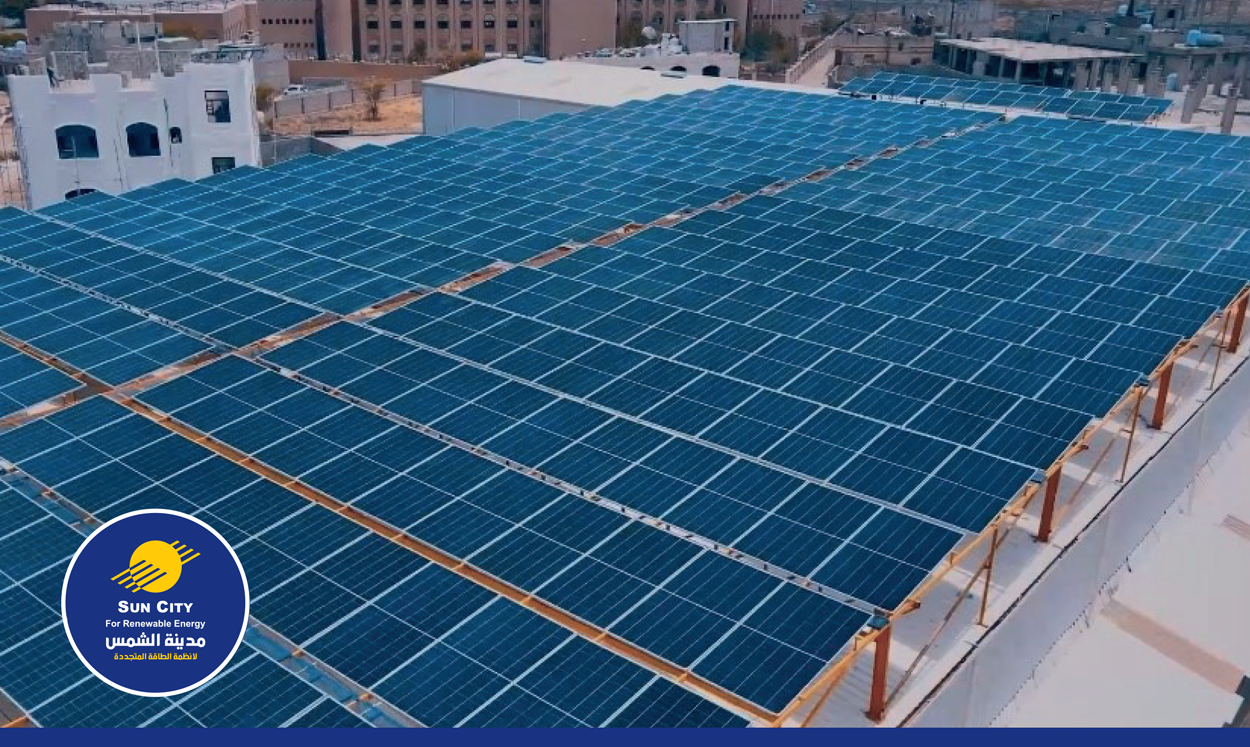
Industrial Sector Al-Haqbi Metal Factory - Sana'aInstallation of a 350 kW grid-connected solar energy system for the Al-Haqbi Metal Factory - Sana'a
Read more
18 Sep 2025
Industrial Sector Taj Sana'a Plastic Factory - Sana'aInstallation of a 550 kW grid-connected solar energy system for Taj Sana'a Plastic Factory - Sana'a
Read more
17 Sep 2025
Industrial sector: Al-Aqil Factory - Taiz Governorate, Al-HawbanInstallation of a 200 kW grid-connected solar energy system for Al-Aqil Factory in Taiz Governorate,...
Read more